
FERRAN ADRIÀ
Chef & Founder of El Bulli | President of elBulliFoundation
Few names in gastronomy carry the intellectual and creative weight of Ferran Adrià. Across 27 years at El Bulli, he not only transformed fine dining, but redefined its language, its structure, and its methodology. From deconstruction and spherification to the systematization of innovation itself, Adrià’s impact continues to resonate in restaurants around the world.
Today, through elBulliFoundation and the Bullipedia project, his work has shifted toward analysis, documentation, and intellectual structuring of gastronomy. An attempt to understand creativity as rigorously as he once practiced it.
The Best Chef: Ferran, when you started with El Bulli, where did the idea come from? Did breaking conventions exist from the beginning?
Ferran Adrià:
No, not at all. My career was completely accidental. I wanted to go on vacation to Ibiza and needed money, so I took a job washing dishes. If that day I had found work as a carpenter, perhaps I would have become a carpenter. There was no grand vision, no early declaration of revolution.
Albert and I were not vocational cooks. We didn’t grow up dreaming of haute cuisine. We came from a working-class family. Going to luxury restaurants wasn’t part of our reality. So the narrative that everything was planned from the beginning is false. It evolved.
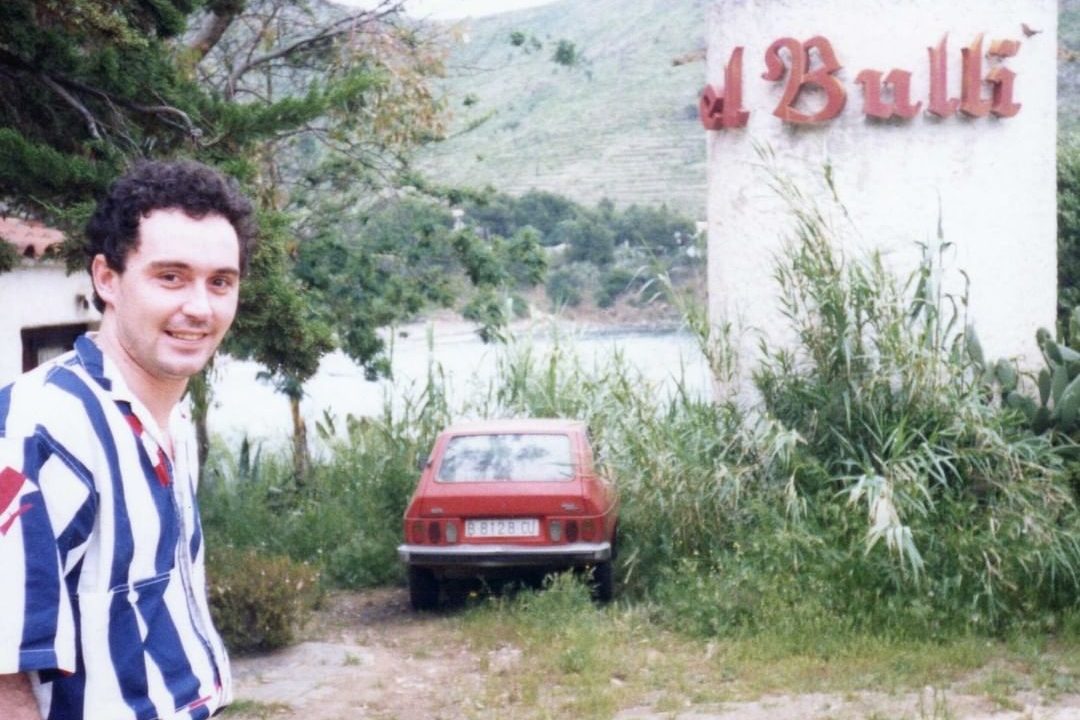
When I arrived at El Bulli in 1984, I entered a system that already existed. The real transformation came later, through questioning. The idea of breaking rules was not romantic. It was analytical. It came from asking: Why do we do things this way? Could it be done differently?
Revolution was not the objective. Curiosity was.
The Best Chef: So it started as traditional haute cuisine, and then you broke all conventions?
Ferran Adrià:
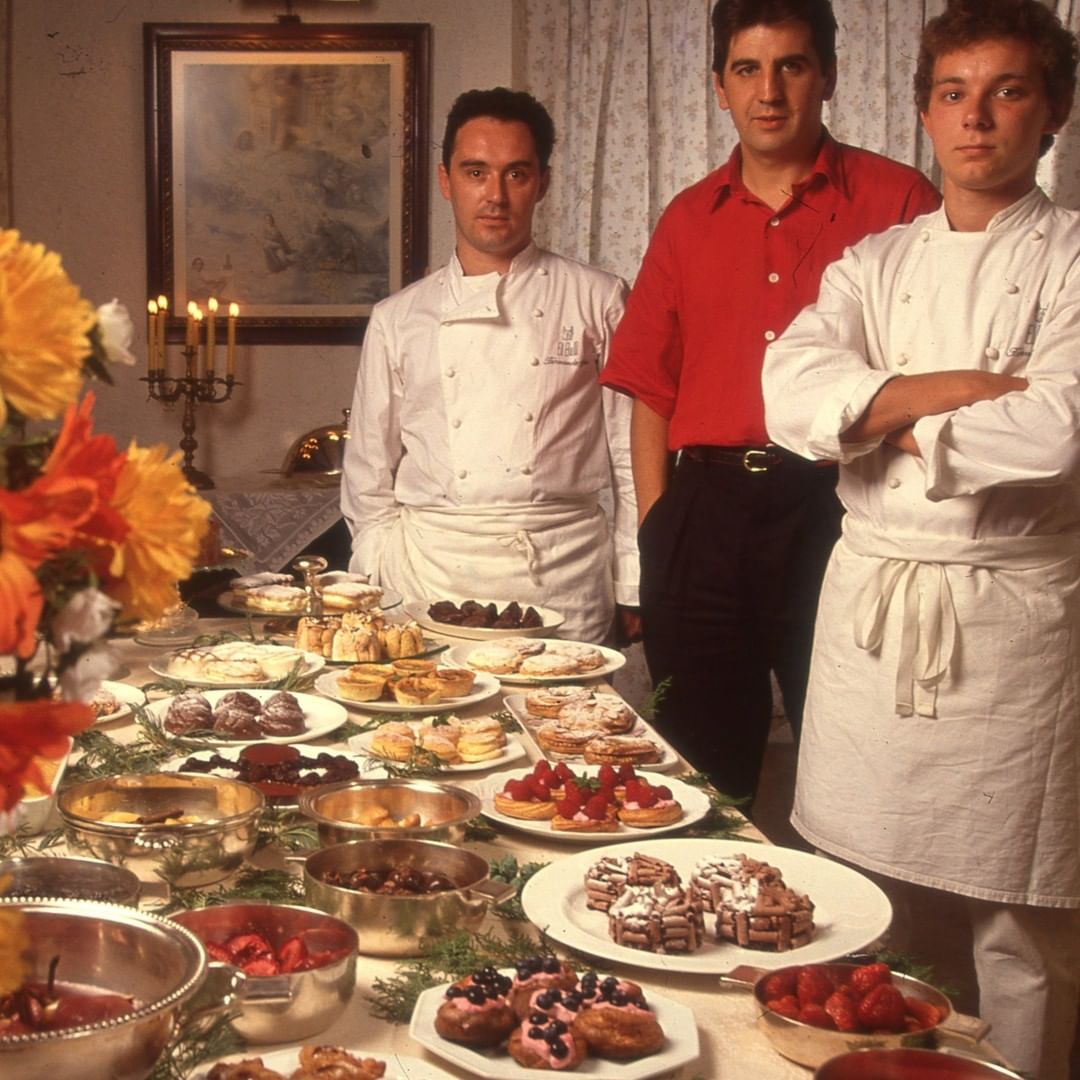
When I became head chef at 22, El Bulli had two Michelin stars. Spain had no three-star restaurants. At that time, haute cuisine in the West had been fundamentally French for four centuries. And we must respect that. Everything we built stood on that foundation.
In 1987, I attended a conference by Jacques Maximin. Someone asked him, “What is creating?” He replied: “Not copying.” That sentence changed my life.
From that moment, the objective was clear: to create a new language.
The long tasting menu people associate with El Bulli? Its structure didn’t come from nouvelle cuisine. It came from tapas culture. From moving between bars, tasting many small bites. We transformed that social structure into a gastronomic format.
Our mission became to explore the physical and mental limits of a dining experience. By 2007, El Bulli reached creative maturity. Between 2007 and 2011, we were operating at what I consider our peak.
We closed because we reached a limit. Creativity at that intensity cannot continue indefinitely. No chef in history has maintained maximum creative disruption for 25 consecutive years.
The Best Chef: What was the initial reaction of guests and chefs?
Ferran Adrià:
People simplify El Bulli to spherification or deconstruction. But that’s superficial.
We created the first culinary workshop-laboratory. We systematized innovation. We built creative calendars. We initiated dialogues between cuisine and science, cuisine and art, cuisine and Japanese gastronomy.
Before El Bulli, pleasure in haute cuisine was primarily sensory-perceptive. “This tastes good.” El Bulli introduced intellectual tension. We forced diners to ask questions. Is this sweet or savory? Is this hot or cold? What is texture? What is the expectation?
That intellectual discomfort was revolutionary, and not everyone enjoys being intellectually challenged while eating.
The Best Chef: Speaking about Albert, what role did he play?
Ferran Adrià:
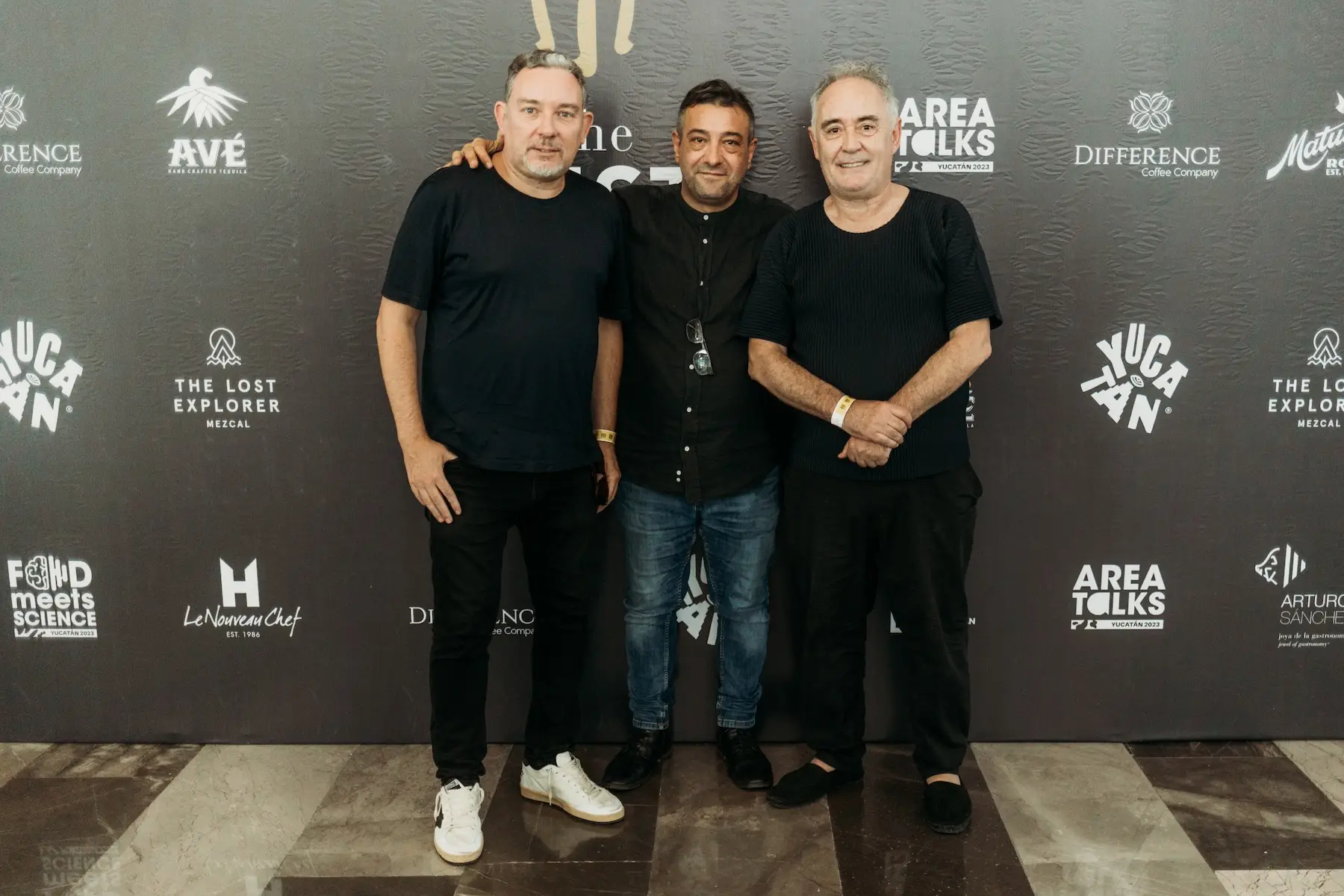
Albert was fundamental. For decades, I worked alongside Albert Adrià and Oriol Castro. Two extraordinary creative minds.
Creative longevity requires mutual admiration. We admired each other deeply. That is why we lasted.
Today, if someone wants to experience the closest thing to El Bulli’s spirit, I tell them to visit Enigma. Not because it imitates El Bulli, but because it continues the exploration of limits. especially in how the experience unfolds.
A single genius is a myth. Sustained creativity requires a team.
The Best Chef: How important is talent?
Ferran Adrià:
Talent is everything. If you don’t have talent, you have nothing.
But talent is not enough. It must be cultivated through discipline and effort. I worked 330 days per year, fifteen hours a day. Creativity is not magic. It is trial, error, repetition.
Like in football: Messi appears once in a generation. In cuisine, the same.
The Best Chef: And the intellectual side?
Ferran Adrià:
There is creative talent, sensory talent, intellectual talent. Few people possess all three.
I have eaten in thousands of restaurants and tasted hundreds of thousands of dishes. Over time, you build what I call a “mental palate.” When you taste something traditional, you have references. When you taste something radically creative, you don’t. Without references, evaluation becomes complex.
The intellectual dimension of cuisine is underestimated. That is why we are developing theory through Bullipedia to analyze types, styles, and movements in gastronomy as art history does for painting.
The Best Chef: Do you eat more with your palate or your brain?
Ferran Adrià:
Tasting is one of the most complex neurological processes humans experience. We are currently collaborating with leading scientists studying sensory perception.
For most people, dining should simply be pleasure. But when you pursue creative emotion, true surprise, the brain plays a crucial role.
To surprise someone who has eaten 200,000 dishes is extremely difficult. But creative emotion, that moment of intellectual and sensory shock, is the highest value in haute cuisine.
The Best Chef: El Bulli was only open eight hours a day?
Ferran Adrià:
In later years, yes. Working conditions evolved. Earlier, we couldn’t afford staff. We had no money. Later, we structured it differently.
There’s a misconception that El Bulli lost money. The restaurant itself was not the only economic engine. Through consulting, with companies like Nestlé and PepsiCo, we created a sustainable ecosystem.
Today, the fine dining business model is under enormous pressure: inflation, rent increases, labor regulations, rising costs. Surviving with only one high-end restaurant is extremely difficult.
The model must diversify.
The Best Chef: Your impact is visible everywhere today.
Ferran Adrià:
The long tasting menu is part of what I call the techno-emotional movement. That’s not ego. It’s a historical fact.
In the 1980s, there were about 16 three-star Michelin restaurants worldwide. Today there are over 150. The global ecosystem expanded.
Fine dining is not dying. It is evolving.
The Best Chef: When El Bulli closed, did something fundamentally change?
Ferran Adrià:
The world doesn’t end with one chef. Not with Escoffier. Not with Bras. Not with me.
Since the birth of nouvelle cuisine in 1968, we’ve experienced fifty years of intense transformation. There have never been so many technically excellent restaurants.
But true disruption. That is rare. It requires courage and risk.
The Best Chef: Define “The Best Chef” in one word.
Ferran Adrià:
Creativity.
Awards are important. Michelin, 50 Best, The Best Chef. Plurality is healthy. But what ultimately changes history is creative capacity.
Without creativity, excellence becomes repetition.
And repetition never changes the world.
